The Reserve Bank has just made it five. At today's Melbourne Cup Day meeting, the monetary policy board lifted the cash rate by 0.25 percentage points to 4.85% — the fifth increase of 2026 and the highest level since late 2008. 1
The decision wasn't even unanimous: six board members voted to hike, three voted to hold — the clearest sign yet that the RBA itself is divided on how much pain the economy can take. 2
And within hours, Commonwealth Bank economists published the grimmest housing forecast of the downturn so far: national dwelling values are now expected to fall 14% from peak to trough — the largest decline in the history of the national monthly price series. 3
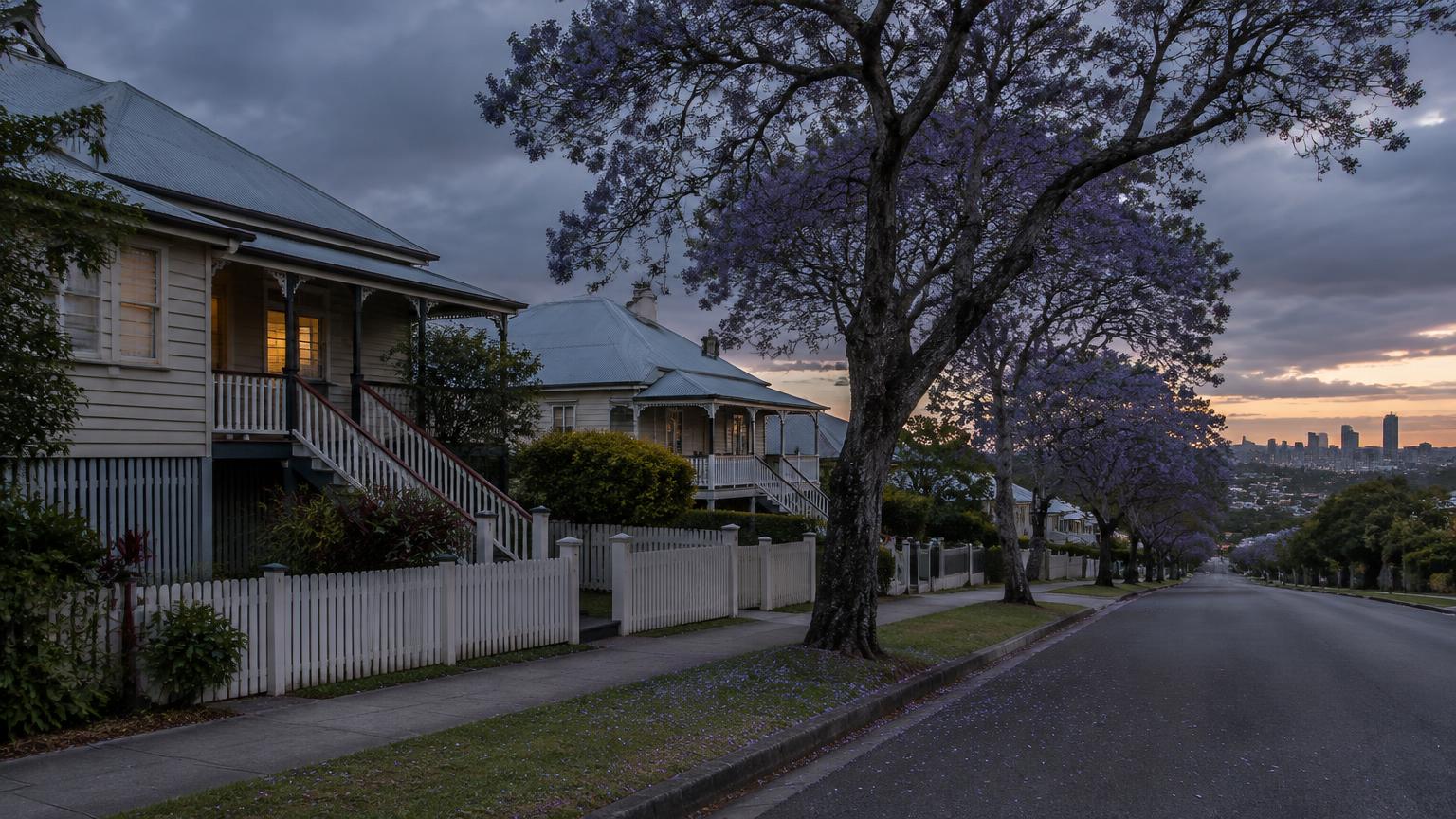
Sources were published 2–3 November 2026. The RBA statement is today's; CBA's forecast was published the same day. Repayment figures below are illustrations, not quotes. The image is an AI-generated illustration of an Australian street, not a real property.
What the RBA actually said
Today's statement is darker than September's. The board noted that inflation — 4.3% over the year to September — is "broadly based", and that its own staff forecasts have been revised materially higher. 1
The key line for anyone with a mortgage:
Inflation is now forecast to remain elevated through much of 2027 and is not expected to reach the top of the 2–3 per cent target range until late 2027 — around three quarters later than previously expected.
Three things are driving it, and none are quick fixes: 1 4
- The Middle East oil shock — higher fuel and commodity prices flowing through to everything.
- The global AI investment boom — rapid price growth in technology-related goods.
- Domestic capacity pressures — the RBA's business liaison says many firms are already raising prices or planning to.
The board "left the door open for more rate hikes", with the next meeting on 8 December. 5
CBA's new forecast: the biggest fall on record
CBA Senior Economist Trent Saunders today cut the bank's house price forecasts for the second time in two months. The numbers: 3
| CBA forecast (peak to trough) | September update | Today's update |
|---|---|---|
| National dwelling values | −9% | −14% |
| Five-capital-city average | — | −15% |
| Brisbane and Perth | — | −18% |
To put that in context: Cotality's October index already showed national values 6.7% below the March peak and capital cities down 8.1% in seven months — the fastest downturn in 40 years, as we covered yesterday. CBA is now saying the market is barely halfway through the fall.
The bank's economists also expect weaker economic growth, softer home prices and higher unemployment as rates bite — what The Guardian describes as a "sharper, longer slowdown", with some economists warning the economy could be tipped into recession. 6 7
What five hikes in a year do to a mortgage
The cash rate started 2026 at 3.60%. After today it's 4.85% — 125 basis points in eleven months. On an illustrative $600,000, 25-year principal-and-interest loan where the mortgage rate moves with the cash rate:
| Illustrative rate | Monthly repayment | |
|---|---|---|
| January 2026 | 5.85% | ~$3,810 |
| After today's hike | 7.10% | ~$4,280 |
| Increase | +1.25pp |
Today's hike alone adds roughly $96 a month on that loan. And the AFR reports mortgage repayments are now approaching record levels as a share of the economy. 8
The grim part: there's no relief priced in
The worst news in today's statement isn't the hike — it's the timeline. If inflation doesn't reach even the top of the target band until late 2027, rate cuts are a 2028 story at best. That means:
- Borrowing power keeps shrinking. Each hike cuts what buyers can borrow, which is exactly why prices keep falling.
- The downturn has further to run. CBA's −14% national and −18% Brisbane/Perth forecasts are built on rates staying high, not rising further.
- Refinancing stays hard. If you bought near the peak, your equity is shrinking while your repayments rise — the refinance trap we wrote about last month is now reality for more owners.
- Investors face the squeeze from both sides. Higher interest costs land just as the Budget's negative gearing changes limit how much of the loss you can claim. Run your own numbers with our negative gearing calculator before assuming the tax offset softens the blow.
What to watch next
- 8 December — the RBA's next meeting, and the last of 2026. Three board members already wanted to pause; if the data softens, December is where the split could flip.
- Cotality's November index (1 December) — whether the monthly fall is accelerating toward CBA's trajectory or flattening.
- The December-quarter inflation print (late January) — the number that decides whether 2027 opens with hike number six.
One honest caveat: CBA's −14% is a forecast, not a fact — the same bank predicted −9% in September and had to revise it. Forecasts in both directions have been wrong this cycle. What isn't a forecast is today's 4.85% cash rate, the 4.3% inflation reading, and the 6.7% of value already gone. Plan around those, and treat the projections as scenarios to stress-test against — not certainties.
This article is general information, not financial advice. Figures are drawn from the linked sources; repayment examples are illustrations that assume the mortgage rate moves one-for-one with the cash rate.