

The best Real Flow alternative may not be another all-in-one platform. The right choice depends on whether you need to assess a purchase, manage tenancy tasks or track an existing portfolio. If you’re searching for real flow alternatives for investment property tracking, start with the work you need done, not the longest feature list.
Rent, expenses and property manager statements can end up scattered across inboxes and spreadsheets. A basic spreadsheet may suit a small portfolio, but keeping property-level records organised can take more effort as you add properties, handle documents or track information across states. Tools built for buying or lending won’t necessarily help with ongoing rental records.
This guide compares practical approaches by what they help you manage, where their trade-offs sit and how they may suit a growing portfolio. You’ll see where spreadsheets, tenancy management platforms and Australian portfolio-tracking software fit, including PropAlly, which brings property data and documents together in a dashboard. The aim is to help you choose a method that suits your workflow and keeps your records easier to review.
Key Takeaways
- Define the task you need covered: rental records, tax-related information or investment performance. Similar-sounding tools may solve very different problems.
- Compare real flow alternatives for investment property tracking by property-level visibility, data entry and limitations, not by feature lists alone.
- Match your system to your portfolio and routine. A manual setup may be enough for one property, while repeated administration can make a more structured approach worth considering.
- Plan a controlled switch: map your records, check import options, test the new workflow and reconcile transferred information against original documents.
- Consider whether an Australian-focused dashboard such as PropAlly fits your needs for property-level cash flow, tax and compliance visibility.
Real Flow alternatives for investment property tracking: what are you replacing?
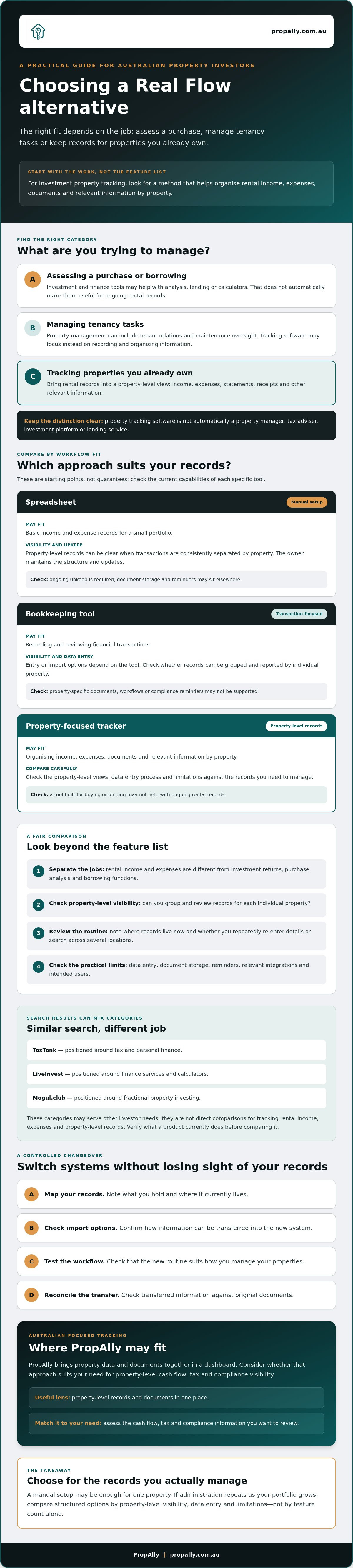
“Alternative” depends on the job you need done. Are you trying to review rental cash flow, organise tax records, store property documents or assess investment performance? These needs can overlap, but a platform designed for investing or finance may not organise the day-to-day records for properties you already own.
Property tracking software organises income, expenses, documents and other relevant information by property, so investors can review their records in one place. It isn’t automatically a property manager, tax adviser, investment platform or lending service. The distinction matters: property management can cover a wider set of property management tasks, including tenant relations and maintenance oversight, while tracking software may focus on recording and organising information.
What might investors mean by Real Flow?
The search phrase alone doesn’t confirm which Real Flow product is meant, whether it’s currently available in Australia or what it can do. Check the product’s current first-party information before treating it as a direct comparison. Verify its functions, intended users and relevant integrations, then compare them with your tracking requirements. Don’t assume a tool handles Australian rental records simply because it appears in search results.
Which tracking job needs a better alternative?
Start with the gap in your current process. You might need a clearer view of cash flow, better organisation of tax records, a reliable place for agent statements and receipts, or a way to review compliance-related information. Note where each item lives now: a spreadsheet, email inbox, property manager’s statements or a separate record-keeping tool. If you repeatedly re-enter details or search across several locations, it may be harder to keep oversight of your records.
Search results can also group together services that do different jobs. TaxTank is positioned around tax and personal finance, LiveInvest around finance services and calculators, and Mogul.club around fractional property investing. Those categories may be relevant to other investor needs, but they aren’t direct comparisons for tracking rental income, expenses and property-level records. Compare each option by the work it supports, not just by its appearance in a search for alternatives.
For a clearer way to assess investment returns across properties, see this guide to the Australian property portfolio performance tracker. It can help you distinguish performance analysis from the practical task of keeping rental records organised. That distinction gives your search for real flow alternatives for investment property tracking a more useful starting point.
How to compare investment property tracking alternatives fairly
A useful comparison starts with workflow fit, not feature count. Separate rental income and expenses from investment returns, purchase analysis and borrowing functions. A finance calculator may help assess a loan, for example, but it won’t tell you whether rent and property expenses are organised by property.
Compare spreadsheets, bookkeeping tools and property-focused trackers
Use the same questions for each method. The table is a starting point, not a claim that every tool in a category has identical functions. Check current product information before relying on a specific capability.
| Method | Best-fit task | Data entry | Property-level visibility | Limitations to check |
|---|---|---|---|---|
| Spreadsheet | Basic income and expense records for a small portfolio | Usually manual; the owner maintains the structure and updates | Can be clear if transactions are consistently separated by property | Requires ongoing upkeep; document storage and reminders may sit elsewhere |
| Bookkeeping tool | Recording and reviewing financial transactions | Depends on the tool and how transactions are entered or imported | Check whether records can be grouped and reported by individual property | May not support property-specific documents, workflows or compliance reminders |
| Property-focused tracker | Bringing property-level records and portfolio information together | Check whether data is entered manually or documents can be read | Verify how it presents each property alongside portfolio-wide information | Features vary; confirm document handling, reporting and relevant Australian support |
For example, PropAlly can read agent statements and inbox documents, consolidate data across multiple properties and track cash flow, tax, compliance and bond evidence in a dashboard. Its state-specific compliance checklists provide Australian context, but software isn’t a substitute for legal or tax advice. Check what each system actually includes before comparing it with your current process.
Use the same criteria for every option
Test each option against the same practical workflow. Can you view rent and expenses by property? Can you attach or find agent statements and receipts? Can you produce useful reports and review portfolio-wide information? If you hold properties across states, check whether compliance support accounts for state differences and understand its limits.
Also consider setup and ongoing administration. A spreadsheet may be quick to adapt, but it depends on consistent manual updates. A bookkeeping tool may organise transactions without providing property-specific views. A tracker may bring records together, but confirm how it handles your documents and whether the workflow remains manageable as you add properties. These checks make real flow alternatives for investment property tracking easier to assess on evidence rather than assumptions.
If you’re comparing a property-level dashboard with your current process, review the PropAlly property tracking dashboard as one Australian-focused option.
Which Real Flow alternative suits your Australian property portfolio?
The best fit depends on how much information you handle and how often you need to find it. One property with a steady flow of records may need little more than a well-maintained spreadsheet. A portfolio with multiple agent statements, documents arriving by email and properties across states may benefit from a more structured tracking workflow.
When a spreadsheet or existing finance tool may be enough
A manual system can work well when your portfolio is straightforward, records are manageable and you have a reliable routine for updating them. Check that your categories are consistent, each transaction is linked to the right property, and files are backed up and easy to retrieve. A spreadsheet isn’t automatically unsuitable. The test is whether it gives you an accurate, useful record without creating too much administration.
An existing finance or bookkeeping tool may also suit your needs if it can separate property-related transactions clearly. Confirm that you can find the original statements and receipts behind the entries, rather than relying on totals alone.
When a property-focused tracker may be a better fit
Repeated data handling can become a source of friction. If you regularly sort agent statements, receipts and inbox documents across several properties, a tracker that brings property-level records together may make the workflow easier to review. Look for the specific functions you need, such as consolidated cash flow, tax records and compliance information. Verify how a tool handles documents and state-specific workflows before relying on those features.
For example, PropAlly can read agent statements and inbox documents, consolidate portfolio data and provide state-specific compliance checklists. This may be relevant if you want a clearer view across properties, but tracking software doesn’t determine tax treatment or whether an investment is suitable for you. It helps organise information; decisions about tax and investment circumstances require appropriate professional judgement.
If repeated manual entry is your main pain point, explore this guide to automating rental property data entry. For more on keeping records organised, see the ATO rental property records app guide.
As you compare real flow alternatives for investment property tracking, consider how each system will work if your portfolio grows or spans states. The right approach should make routine records easier to manage without blurring the line between administration, tax advice and investment decisions.
A practical checklist for switching investment property tracking systems
Changing systems is easier when you treat it as a records transition, not just a software sign-up. Map what you hold, check how the new workflow handles it, then validate the information before relying on it. Keep original statements and receipts accessible throughout.
Prepare property records before moving
Start with an inventory of each property and its income and expense records, agent statements, receipts and compliance documents. Note your existing file names and categories so you can still identify what each item relates to after the move. Don’t discard source records just because information has been transferred to a new system.
Follow a staged transition
- 1. Map your records. List the properties, document types and date ranges you need to organise. Note where records currently live, such as spreadsheets, email or folders.
- 2. Compare workflows. Check how each option handles property-level information, documents, reporting and your regular review routine. Identify the steps you’ll still need to do manually.
- 3. Verify transfer options. Ask each provider about data export and import options, access controls, integrations and support arrangements. Confirm what can be transferred and what may need to be entered or attached manually.
- 4. Test a sample. Use one representative property and a small set of documents, such as an agent statement and receipts. Check that the process is clear before moving more records.
- 5. Review and reconcile. Compare transferred or extracted information with the original statements and receipts. Check that property associations, dates and amounts are represented as expected, and retain source documents for reference.
A test can expose practical gaps early. Confirm current plan limits and any document add-on terms before committing, and ask how support works if you need help with the transition. Don’t assume a provider’s import options, integrations or access settings will meet your needs without checking them directly.
Keep decisions about tax treatment and compliance requirements with your qualified advisers. Tracking software can help organise records, but it doesn’t replace professional advice or determine how a particular item should be treated.
These steps make it easier to assess real flow alternatives for investment property tracking against your records and routine. To explore an Australian-focused option for bringing property information together, review PropAlly’s property tracking dashboard.
Consider PropAlly as an Australian-focused tracking alternative
If you want property-level visibility rather than a tool focused mainly on financing or investing, PropAlly is one Australian-focused option to assess. Its dashboard brings together cash flow, tax, compliance and bond evidence across rental properties. The practical question is whether those areas match the records and workflows you need to manage.
Where PropAlly may fit in an investor's workflow
Agent statements and other property documents can arrive through different channels. PropAlly can read agent statements and inbox documents, then consolidate portfolio data. That may suit investors who want less fragmented information when reviewing property records. It also provides state-specific compliance checklists and bond authority workflows. These features support organisation, but shouldn’t be treated as a guarantee of legal compliance or a substitute for professional advice.
For more detail on one plan option, read the PropAlly Starter Plan guide for Australian property investors. Use it alongside current product information to check whether the described workflow aligns with your needs.
Choose a next step based on portfolio needs
Before comparing plans, write down the tasks you need covered. Do you want to organise property-level cash flow, keep tax-related records together, review compliance information, or bring agent statements and inbox documents into a more consolidated workflow? Then check each plan’s current inclusions and property limits against your portfolio. Confirm the terms for any email document add-ons before relying on them.
PropAlly has a Free Plan and paid plan options. The available information describes the free option as covering one property and paid tiers for portfolios of up to twenty properties, but plan limits and inclusions can change. Verify the current details before choosing. If your needs are simple, compare those workflows with the routine you already use. If you handle multiple properties or frequent documents, focus on whether the organisation tools address that workload.
PropAlly organises property information; it doesn’t provide property management services or determine tax treatment or investment suitability. Keep those decisions separate as you compare real flow alternatives for investment property tracking.
Ready to check whether it fits your workflow? Explore PropAlly's property tracking dashboard and review the current plan details against your portfolio needs.
Choose a tracking approach that grows with your portfolio
The right alternative depends on what you need to track. Compare tools by how they organise rental income, expenses, documents and property-level information, rather than assuming an investing or finance service will manage rental records. A spreadsheet may remain practical for a straightforward portfolio; document-heavy workflows may call for a more consolidated system.
Before switching, map your records, check transfer options and reconcile a sample against original documents. That gives you a clearer basis for choosing among real flow alternatives for investment property tracking while keeping your own workflow in view.
PropAlly is an Australian-focused dashboard for property cash flow, tax, compliance and bond evidence. It can read agent statements and inbox documents to consolidate property information, and includes state-specific compliance checklists and bond authority workflows. Check current plan details and confirm they suit your needs.
Explore PropAlly's property tracking dashboard to see whether its approach fits your portfolio. With a clear process and organised records, you can make your next tracking decision with confidence.
Frequently Asked Questions
What are the best alternatives to Real Flow for investment property tracking in Australia?
The best option depends on the work you need it to handle. Spreadsheets can suit straightforward records, while bookkeeping tools may help organise transactions. For property-level cash flow, tax, compliance and document visibility, compare property-focused trackers such as PropAlly. Check each option’s current features, Australian relevance, data-entry process and property limits before deciding. These real flow alternatives for investment property tracking aren’t interchangeable, so start with your workflow.
Is Real Flow a property management or investment property tracking platform?
The name alone isn’t enough to confirm which Real Flow product you mean or whether it’s available in Australia. Check the product’s current first-party information for its intended users and confirmed functions. Property management may include tenant and maintenance tasks, while investment tracking can focus on organising rental income, expenses and documents. Don’t assume a platform covers either job, or both, until you’ve verified its current features.
Can I track rental income and expenses in a spreadsheet instead?
Yes. A spreadsheet can work if you consistently record income and expenses against the correct property and keep supporting statements and receipts accessible. Set clear categories, review entries regularly and maintain a reliable backup. As your portfolio or document volume grows, consider whether updating and checking the spreadsheet takes more effort than it saves. The right choice depends on whether your method remains accurate, manageable and easy to retrieve from.
What should an Australian investor compare in property tracking software?
Compare property-level cash flow, expense records, document capture, reporting and portfolio-wide visibility. Check whether agent statements and receipts can be added or read, and whether information stays linked to the right property. If you hold properties in different states, review any state-specific compliance features and their limits. Also ask about setup, data export, access controls, integrations and support. Software can organise records, but it doesn’t replace qualified tax or legal advice.
Can property tracking software manage records across different Australian states?
Some platforms can consolidate portfolio information across properties, but state-specific features vary. Confirm directly with the provider whether records can be separated by property and whether any compliance checklists or workflows reflect the states relevant to your portfolio. PropAlly consolidates property data and provides state-specific compliance checklists and bond authority workflows. These tools can support organisation, but don’t assume they guarantee compliance or replace advice from a qualified professional.
How do I switch from a spreadsheet to property tracking software?
First, list your properties, record types, categories and where source documents are stored. Check what the new provider can import, then test the workflow with one property and a small document sample. Compare transferred details against original statements and receipts before moving more records. Keep source documents accessible, confirm export options and current plan limits, and review the results once the transition is complete. This staged approach helps catch missing or mislabelled information early.
Does PropAlly provide tax or property management advice?
No. PropAlly provides a dashboard for organising property cash flow, tax, compliance and bond evidence. It can read agent statements and inbox documents, and includes state-specific compliance checklists and bond authority workflows. Those features support record organisation; they don’t make PropAlly a provider of financial or tax advice or property management services. Ask a qualified adviser about tax treatment or compliance decisions for your circumstances, and verify what the platform’s current features include.