
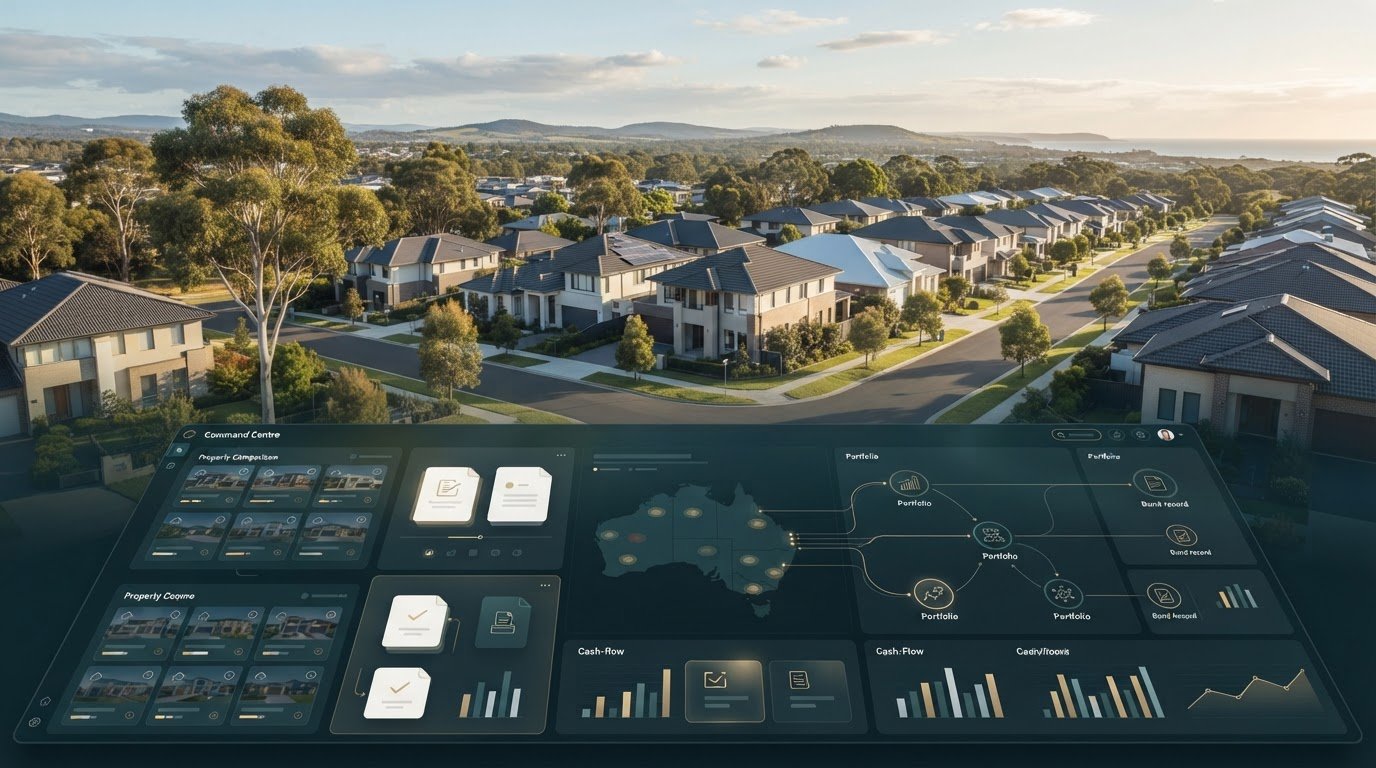
The most feature-packed property platform may be the wrong fit for your portfolio. If you're searching for “property management software comparison australia”, start with the work you need the system to handle, not the length of its feature list.
It’s easy to confuse software for managing tenants with tools that help property owners organise their records. Agency platforms often focus on day-to-day tenancy workflows, while investor-focused systems can bring cash flow, tax records and compliance evidence together. For portfolios spread across states, the distinction matters. So does reducing manual entry from agent statements and documents received by email.
This guide compares the main categories of Australian property software against practical portfolio workflows. You’ll see what to check for in agent and tenant management, bond evidence, state-specific compliance, cash-flow tracking and record-keeping. We’ll also look at how investor platforms such as PropAlly can help consolidate information across agent-managed and self-managed properties. By the end, you’ll have a clearer way to assess what fits your portfolio, without mistaking an agency management system for an owner’s record-keeping hub.
Key Takeaways
- A useful property management software comparison australia starts by identifying whether you need tenant operations, investor oversight or general bookkeeping.
- Compare platforms by the records and workflows they support, including agent statements, cash flow, bond evidence and state-specific compliance tracking.
- Check Australian relevance, document-processing limits, plan structure and usability before choosing a system.
- Match the software to your portfolio: a single-property owner may need different tools from an investor coordinating properties across states or management arrangements.
- PropAlly is an investor-focused dashboard for tracking cash flow, tax, compliance and bond evidence, not a tenant-management service.
Property management software in Australia: what are you actually comparing?
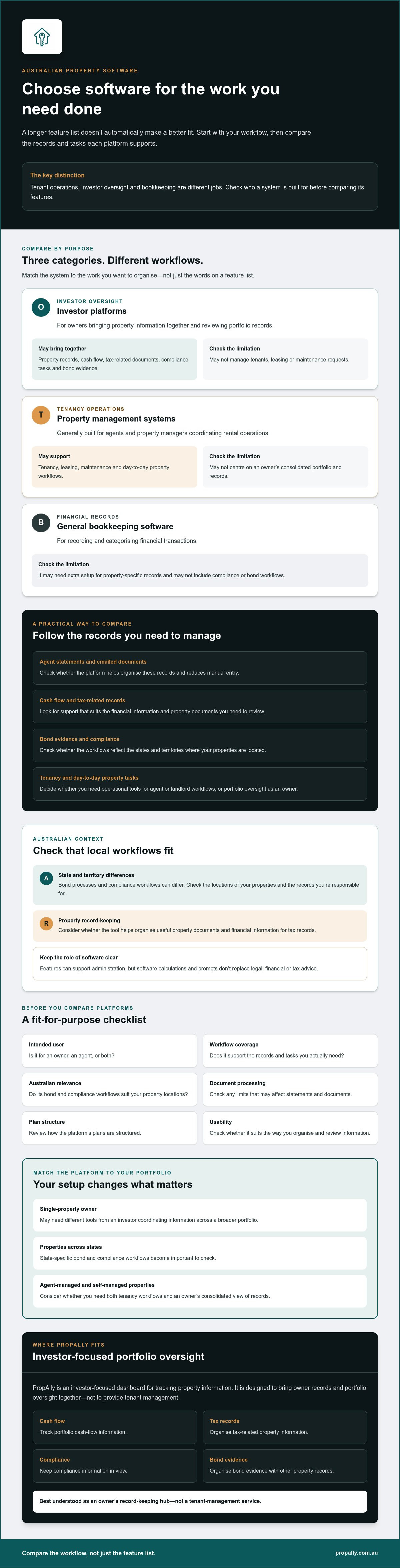
Property software is an umbrella term, not a single type of system. It can mean tools that help agents handle tenancy operations, platforms that help investors organise portfolio records, or general bookkeeping software used to track income and expenses. The broad concept of Property management also includes software and property technology, but the tools differ in who they serve and what work they support.
That distinction is central to a useful property management software comparison australia. A feature list might mention rent, documents or reporting, but the practical question is whether the system handles your work as an owner, an agent, or both. This guide focuses on software for Australian rental property owners and investors, rather than choosing a provider to manage a tenancy for you.
Investor software versus property manager software
Investor-focused tools help owners bring property information into one place. Depending on the platform, that may include agent statements, cash-flow records, tax-related documents, compliance evidence and bond information. The aim is portfolio oversight: keeping records organised and making it easier to review information across properties.
Property management systems, by contrast, are generally built around operational work for agents or landlords, such as coordinating tenancy records and day-to-day property tasks. The software itself isn’t a property management service. Before comparing products, check who the intended user is and whether the system supports your workflow. This is especially important if an agent manages some properties while you oversee others.
Why Australian requirements change the comparison
Australian context matters because rental administration isn’t identical across every state and territory. Bond processes and compliance workflows can differ, so check whether a platform’s tools reflect the locations of your properties. A generic document store may keep files together, but it won’t necessarily help you track the specific records or workflows you’re responsible for.
Tax records are another consideration. The Australian Taxation Office is relevant to rental property record-keeping and tax reporting, so assess whether a tool helps organise useful property documents and financial information. Don’t treat software calculations or prompts as a substitute for professional advice. Features can support administration, but they don’t replace legal, financial or tax advice.
For this comparison, the key distinction is the work being supported:
- Investor oversight: organising property records and reviewing portfolio information.
- Tenancy operations: supporting the practical workflows involved in managing a rental property.
- Bookkeeping: recording and categorising financial transactions, which may not include property-specific compliance or bond workflows.
Once you’ve identified the category that fits, compare tools by their actual workflows, Australian relevance and the records you need to keep, not by feature count alone.
Compare the main property software categories by the work they handle
Compare systems by the job they’re built to do. An investor platform may consolidate records without handling tenancy operations. A property management system may support agent workflows without giving an owner the portfolio view they need. General bookkeeping software can organise transactions, but may require extra setup for property-specific records. The right fit depends on where your administration currently sits and what you want to bring together.
| Category | Primary user and core task | Typical data captured | Potential limitation |
|---|---|---|---|
| Investor platforms | Owners tracking portfolio information | Property records, cash flow, tax-related documents, compliance tasks and bond evidence | May not manage tenants, leasing or maintenance requests |
| Property management systems | Agents and property managers coordinating rental operations | Tenancy, leasing, maintenance and property workflow information | May not centre on an owner’s consolidated portfolio and records |
| General bookkeeping tools | Owners or bookkeepers recording transactions | Income, expenses and supporting financial documents | May need manual processes to organise records by property or track compliance and bond workflows |
Portfolio tracking and investor administration platforms
For investors, check whether a platform brings together agent statements, inbox documents and records for each property. Then test the portfolio view. Can you review cash flow, tax-related information, compliance tasks and bond evidence across properties, including those in different states? Automated document reading may reduce manual entry, but check which documents it processes and how you can review the extracted information. An investor platform can support oversight without managing tenants or leasing.
For a broader look at owner-focused options, see this Australian property management tools guide.
Property management systems and general accounting tools
Property management systems are designed around operational workflows, such as coordinating tenant communication, leasing and maintenance. If an agent handles those tasks, you may need visibility into records rather than another system for running the tenancy. Bookkeeping tools can help organise financial transactions, but check whether property-by-property reporting and Australian rental records require additional setup or manual work.
Tenant information adds another comparison point. Review what data a platform collects, stores and makes accessible. AHURI’s research on tenant data collection highlights why privacy, security and potential discrimination risks belong in a software assessment, especially for tools used in tenant-facing operations.
This is the practical lens for a property management software comparison australia: match the category to the work, then check how well it fits your portfolio. If owner-level tracking is the gap, explore PropAlly’s investor dashboard as one option for consolidating rental property information.
A practical checklist for comparing Australian property management software
Use the same checks for every platform. A structured property management software comparison australia helps you look past feature claims and see whether a system fits your records, properties and day-to-day workflow.
Check records, automation and portfolio visibility
- Map the records: Can you organise cash-flow information, tax records, compliance details and bond evidence by property?
- Trace document entry: Can you import or automatically read agent statements and receipts? What needs to be checked or corrected by a user?
- Review the portfolio view: Can you see each property separately, then review information across the portfolio, including properties in different states?
- Test reports: Are records and reports clear enough to review with your accountant or adviser? Check whether you can export information in a useful format.
- Try the workflow: Use sample records to see how many steps it takes to find a statement, update a document or review a property’s information.
For guidance on choosing measures to monitor, see this property portfolio performance tracker guide.
Check Australian workflows, plans and data handling
- Confirm local fit: Check whether state-specific compliance checklists and bond-related records cover the states where your properties are located. Treat software prompts as administrative support, not confirmation that you’ve met every obligation.
- Compare plan limits: Match property limits and included document processing to your portfolio and the volume of statements or inbox documents you handle. Check whether document features or capacity vary by plan, and whether optional add-ons are relevant.
- Review current terms: Plan features can change. For example, PropAlly’s published information as at September 2026 lists a Free tier for one property, with paid plans supporting portfolios of up to twenty properties. Its Pro and Business plans include monthly email-document limits, so confirm current inclusions and add-on details directly before choosing.
- Inspect data handling: Read each provider’s current documentation for privacy information, user access controls and data export options. Check who can view or change records, and how you could retrieve them if you move systems.
- Assess usability and support: Confirm the system is straightforward for everyone who’ll use it. Check what help channels are available and whether their response arrangements suit your needs.
Keep your shortlist focused on the gaps you actually need to solve. If consolidating rental records and portfolio information is a priority, explore PropAlly’s investor platform as one option to assess against this checklist.
Match software to your portfolio size, workflow and oversight needs
Choose around the work you need to do, not the size of a platform’s feature list. A single-property owner may need a simple way to review income, expenses and documents. An investor with properties across states may need consolidated records while still being able to check each property’s statements, bond evidence and tax-related documents separately.
- Define the job. Decide whether you need portfolio oversight, tenancy operations, bookkeeping, or a combination. Be specific about what you expect the software to handle.
- Map the records. List where agent statements, receipts, bond evidence and tax records come from, and where you want to find them. Note which information you currently enter or reconcile manually.
- Check the workflows. Follow a real task from start to finish. For example, can you add an agent statement, associate it with the right property and review the resulting cash-flow information? Check how bond and compliance records are organised for the relevant state or territory.
- Trial and review. If a trial or product demonstration is available, use it to test your tasks with representative records. Check the steps involved, the clarity of reports and whether another person, such as your accountant, can review the information in a useful format.
For a first investment property or a small portfolio
Keep the essentials in view: income, expenses and the documents connected to the property. Check that the entry-level plan accommodates the number of properties you need and includes the document-processing capacity your workflow requires. PropAlly’s published information lists a Free tier for one property, with paid plans supporting portfolios of up to twenty properties. Confirm current plan inclusions before deciding. Avoid paying for operational features you won’t use, such as workflows designed for managing tenants, if your priority is owner record-keeping.
For multiple properties across Australian states
Prioritise a portfolio overview that doesn’t blur property-level detail. You’ll want to locate a particular agent statement or bond record without losing sight of the wider portfolio. Check whether state-specific checklists and bond workflows match your administrative needs. Then estimate your document volume and review effort. Automation can reduce manual entry, but you should understand what information still needs checking. Consider add-ons only if their capacity suits the number of documents you actually process.
This is the practical test behind a property management software comparison australia: can the system make your real records easier to organise and review? Once you’ve listed your must-have features, compare your workflow with PropAlly as an investor-focused option for tracking rental property information.
Where PropAlly fits in an Australian property software comparison
PropAlly is an Australian investor dashboard for organising rental property information. It’s designed to help owners track cash flow, tax, compliance and bond evidence across their portfolio. It is not a tenant-management service, so assess it against owner oversight and record-keeping needs rather than agent operations such as managing tenants or leasing.
In a property management software comparison australia, PropAlly is worth considering if your challenge is bringing records together, particularly when information arrives through agent statements and email. Its document-reading capability can help reduce manual entry, while the dashboard provides a consolidated view across properties and states. As with any automated processing, review the information and check how it fits your record-keeping process.
What PropAlly can help investors organise
The platform supports tracking cash flow, tax-related records, compliance information and bond evidence. It can automatically read statements from agents and documents in inboxes, then consolidate information across rental properties. For multi-state portfolios, its state-specific compliance checklists and bond authority workflows help organise relevant tasks and evidence. ATO-aligned tax calculations are also available as an administrative feature, not a substitute for tax advice.
This owner-focused approach may suit investors who want a clearer view of information held across agents, properties and states. It can also support a hybrid arrangement where an agent manages some properties while the owner keeps portfolio records in one place. The key question is whether its workflows match the documents you receive and the records you need to review.
Who should consider another type of system
If you need software to manage tenants or run day-to-day tenancy operations, look for a system built for those workflows. PropAlly doesn’t provide property management services or manage tenants. It also doesn’t provide financial or tax advice. Its role is to help investors organise and track property information.
Before choosing a plan, compare its property limits and included document-processing features with your actual portfolio and document volume. PropAlly’s published information lists a Free tier for one property and paid plans supporting portfolios of up to twenty properties. Confirm current plan inclusions and optional email document add-on details before making a decision.
If the Starter Plan appears to match your needs, explore the Starter Plan details and check the current inclusions. Start with your must-have workflows, then decide whether the platform fits the way you manage your Australian property records.
Choose software that fits the way you invest
The right system is the one that supports your actual workflow. In your property management software comparison australia, first separate tools for managing tenancy operations from platforms built to organise an investor’s records. Then check how well each option handles property-level documents, portfolio visibility and the Australian workflows you need.
For owners seeking a consolidated view, PropAlly brings together cash-flow, tax, compliance and bond evidence tracking. It can automatically read agent statements and inbox documents, helping reduce manual entry while keeping information available for review. Its Free tier is listed for one property, but plan limits and included features can change, so confirm current details before choosing.
If investor oversight is the gap you’re looking to fill, explore PropAlly and find the right starting point for your portfolio. Compare the available options against your must-have workflows and records. With a clear fit, you can spend less time chasing information and feel more in control of your Australian property portfolio.
Frequently Asked Questions
What is the best property management software in Australia for investors?
There’s no single best option for every investor. The right choice depends on whether you need to oversee records and cash flow or manage tenancy operations. In a property management software comparison australia, check that the platform suits your workflow, property count and record-keeping needs. PropAlly is an Australian investor dashboard for tracking cash flow, tax, compliance and bond evidence, rather than a service for managing tenants.
Is property management software the same as landlord software?
Not always. “Property management software” can describe systems for agents handling tenancy operations or tools that help owners organise investment records. “Landlord software” often refers to owner-focused tools, but labels aren’t consistent across providers. Check who the product is designed for and what it actually does. A dashboard for tracking statements and property documents won’t necessarily support leasing, tenant communication or maintenance coordination.
Can property management software track rental income and expenses?
Some platforms can help track rental cash flow, income and expenses, but capabilities vary. Check whether information is entered manually, imported from agent statements or supported by document-reading features. PropAlly can track cash flow and tax-related property information, and automatically read agent statements and inbox documents. Review processed information for accuracy, and treat software features as record-keeping support, not a replacement for accounting or tax advice.
How much does property management software cost in Australia?
Costs vary by provider, plan structure, portfolio size and included document processing. Some investor platforms offer a free tier for a limited number of properties, while paid plans may vary by property limits or document allowances. Optional add-ons can also affect the total. Compare current plan details directly with each provider, including GST treatment and any app-store pricing differences, before deciding which option suits your budget and workflow.
Does Australian property management software handle state-based bond requirements?
Some investor platforms include bond-related workflows or tools for organising bond evidence, but don’t assume every product supports the states where you hold property. Check the provider’s current documentation for state-specific coverage and how records are stored or reviewed. PropAlly offers bond authority workflows and state-specific compliance checklists. These features can assist with administration, but they don’t replace checking applicable requirements or seeking professional advice where needed.
Can one property software platform manage properties across different Australian states?
Yes, some platforms are designed to consolidate information across multiple properties and states. Confirm that you can still view records property by property, and check whether state-specific workflows are available for your needs. PropAlly can consolidate information across properties and states, with state-specific compliance checklists and bond workflows. Before choosing any system, test how you’ll locate statements, bond evidence and other records for each property.
What happens if I choose software that does not match my property workflow?
A poor fit can leave you paying for features you don’t use, entering information manually or keeping records in separate systems. You may also find the platform focuses on tenant operations when your priority is owner oversight, or lacks the document capacity your portfolio needs. Before committing, map where statements and records come from, test common tasks and check plan limits. A short workflow review can reveal gaps early.